
Large exterior gates and panels require more than visual design—they demand structural stability, material reliability, and long-term performance. When using WPC planks for such applications, factors like thickness, rigidity, support systems, and load distribution play a critical role in ensuring durability and safety. This guide outlines the key structural considerations that influence how WPC performs in large-format gate and panel installations.
How does material thickness impact large WPC gate structures?
Material thickness directly influences how a plank behaves under load, especially in large gates and panels where span and weight increase significantly. Thicker WPC profiles provide:
- better resistance to bending
- improved load distribution
- reduced risk of warping over time
In large-format applications, thinner planks may flex under pressure or environmental changes, affecting alignment and performance. Choosing the right thickness ensures that the structure maintains its shape even under repeated use.
What role does frame support play in WPC gate durability?
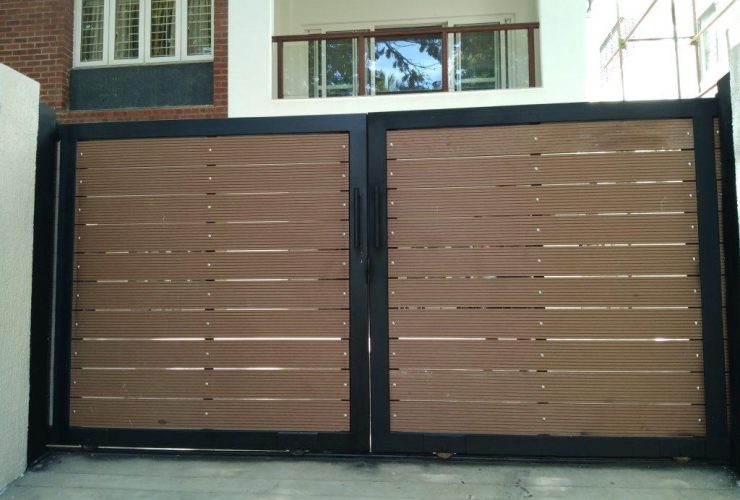
The performance of a WPC gate is not determined by the plank alone—the supporting frame system is equally important. A well-designed frame:
- distributes weight evenly across the structure
- prevents localized stress on planks
- maintains alignment during opening and closing
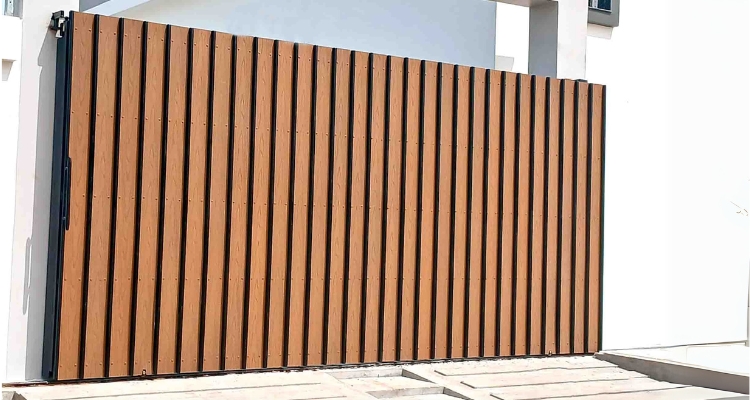
For large gates, metal frames are typically used to provide rigidity, while WPC planks act as the surface material. The interaction between frame and plank determines the overall strength of the installation. For application examples of WPC in gate structures, refer to the WPC Gates section on the Applications page.
How does load distribution affect large panels?
Load distribution becomes critical as the size of the gate or panel increases. Uneven load distribution can lead to:
- sagging in gate structures
- joint stress between planks
- long-term deformation
Proper spacing, fastening techniques, and frame reinforcement help ensure that weight is evenly spread across the structure. This is especially important in wide entrance gates or continuous panel systems.
Why is rigidity important in exterior WPC installations?
Rigidity ensures that the structure remains stable under:
- repeated mechanical movement (opening/closing)
- wind pressure
- environmental exposure
In large gates, lack of rigidity can result in:
- vibration or movement
- misalignment over time
- reduced lifespan of fittings
Selecting rigid plank profiles and combining them with strong support systems improves overall structural reliability.
What environmental factors impact large WPC gates?
Exterior installations are exposed to changing environmental conditions such as:
- heat expansion
- moisture exposure
- UV radiation
While WPC is designed to handle these conditions, structural planning must account for:
- expansion gaps
- proper fastening systems ventilation where required
This ensures that the structure adapts to environmental changes without affecting performance.
How should fastening and spacing be handled in large panels?
Fastening systems play a key role in maintaining structural integrity. Best practices include:
- maintaining consistent spacing between planks
- using appropriate fasteners for exterior use
- avoiding over-tightening, which can restrict natural movement
Correct installation ensures that planks remain secure while allowing for minimal expansion and contraction.
Where are large-format WPC panels commonly used?
Large-format WPC applications are commonly seen in:
- entrance gates
- compound wall panels
- façade elements
- sliding or hinged gate systems
These applications require careful planning to balance aesthetics with structural performance. Explore more use cases across cladding, gates, and exterior applications on the WPC Planks Applications page.
Conclusion
Designing large gates and panels using WPC requires a structural approach that goes beyond surface-level decisions. Factors such as plank thickness, frame support, load distribution, and environmental considerations all contribute to long-term performance.