
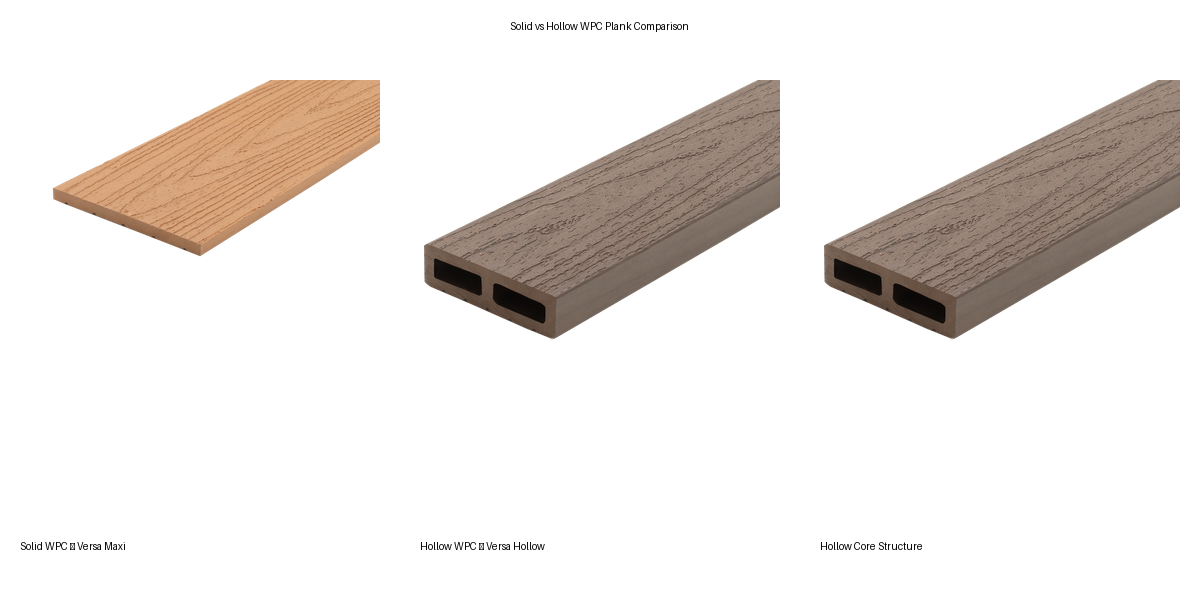
WPC planks are available in solid and hollow configurations. Each profile type offers specific structural characteristics that influence performance in exterior environments.
Selecting the appropriate profile depends on load requirements, application type, and installation conditions.
Structural Characteristics of Solid Profiles
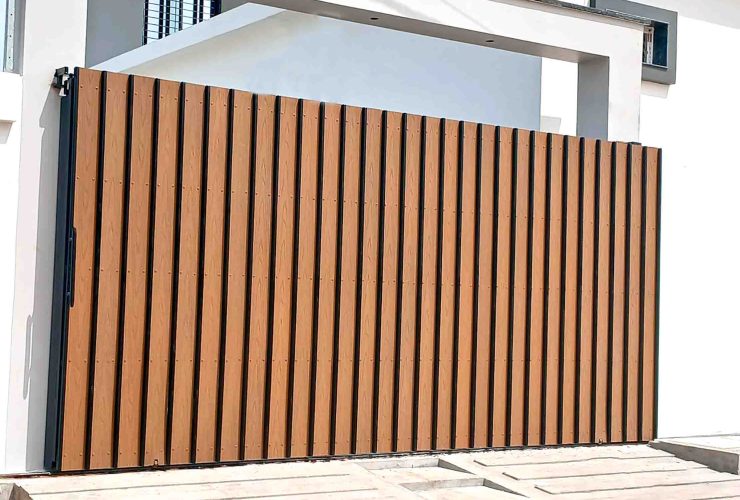
Solid WPC planks feature a fully filled internal structure and are commonly used in installations requiring higher structural stability, such as gates and large panels where solid WPC plank profiles provide enhanced rigidity.
They typically provide:
- Higher rigidity
- Increased load-bearing support
- Enhanced resistance to impact
Solid profiles are often used where structural strength is essential.
Structural Characteristics of Hollow Profiles
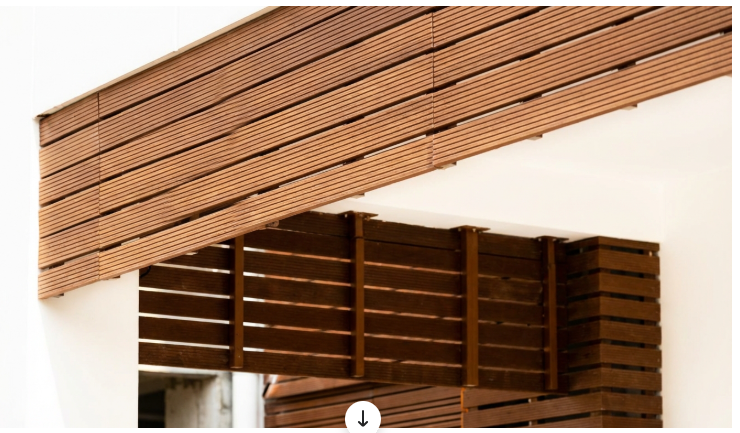
Hollow WPC planks include internal cavities that reduce overall weight while maintaining surface durability. These hollow WPC plank configurations are often selected for fencing, partitions, and lightweight structures. Versa Hollow WPC Plank
They are commonly chosen for:
- Fencing
- Decorative partitions
- Cladding
- Screens and non-load-bearing structures
Application-Based Selection Criteria
Solid profiles are generally preferred for:
- Gates
- Structural panels
- High-impact areas
Hollow profiles are suitable for lightweight installations commonly seen in exterior WPC installations and applications where reduced structural load is preferred. [
- Lightweight installations
- Coverage-focused applications
- Projects where reduced weight is beneficial
Factors That Influence Profile Choice
When deciding between solid and hollow configurations, consider:
- Structural load requirements
- Span and support system
- Environmental exposure
- Installation method
The correct selection ensures durability while maintaining structural efficiency.
Question and Answers on Solid Vs Hollow Planks
1.What is the difference between solid and hollow WPC planks?
Solid planks have a filled internal structure for higher rigidity, while hollow planks reduce weight through internal cavities.
2.Why choose a solid WPC plank?
Solid profiles provide greater structural strength and impact resistance.
3.Where are hollow planks commonly used? In fencing, partitions, cladding, and non-load-bearing exterior applications.
4.When is a solid profile necessary?
When structural load and rigidity are primary requirements.
5.How should a profile be selected?
By evaluating load, span width, and environmental conditi